
As one of the most rapidly expanding sectors in India, the healthcare industry is generating a considerable amount of job opportunities across various industries. With the rise of healthcare awareness, investment into hospitals, expansion of diagnostics facilities, new technology developments, and increasing demand for high-quality patient care; we’ve seen the rapid evolution of the healthcare landscape. In addition to the traditional healthcare professions, there are now many other, new healthcare roles being created which provide accessing to recent college graduates.
For many new graduates completing their program studies in medicine, nursing, pharmacy, physiotherapy, healthcare administration, laboratory technology, and other allied healthcare fields, joining the workforce can be difficult and fulfilling at the same time. First-time job seekers often ask themselves where do I begin? Which healthcare jobs offer me long term job security? What will be my starting salary? What qualities and characteristics do hiring managers look for in candidates?
The healthcare sector has created one of the strongest career paths because it provides both job security to the job seeker and many available growth opportunities. While all other industries are experiencing dramatic changes based on economic factors, healthcare services are still a must. We are not going to run out of people needing to have medical care, diagnostic testing, healthcare treatment, etc. So there is an ongoing need for qualified workers in healthcare.
Many new college graduates feel that their lack of experience will be a hindrance to their recruitment opportunities. But there are many healthcare organizations actively recruiting college graduates and providing a variety of training programs to support them during their transition to new careers.
Why Healthcare Jobs Are Growing in India
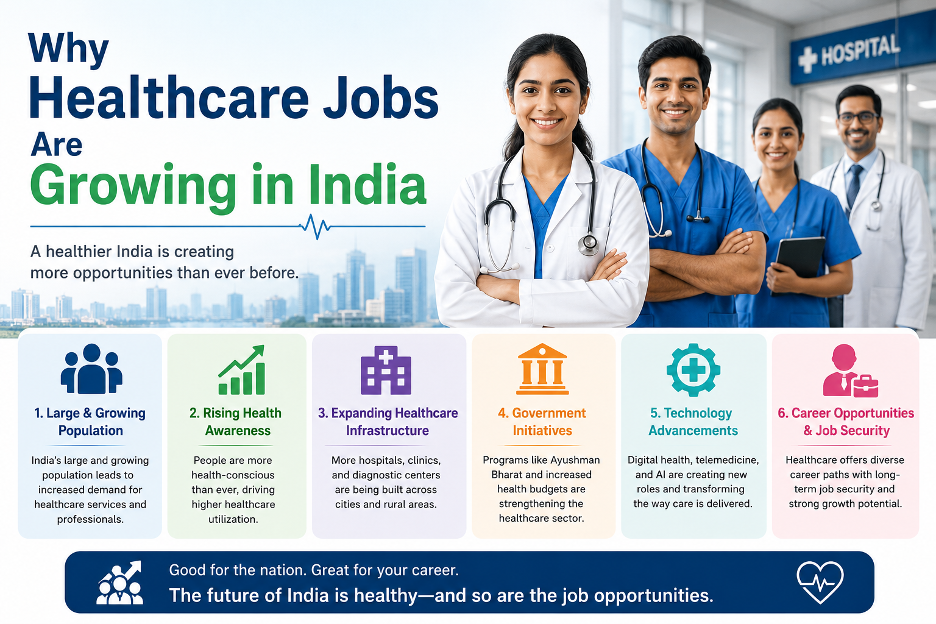
The demand for healthcare in India has risen dramatically over the last several years due to many factors including an increase in population, the prevalence of lifestyle-related diseases, the aging population, urbanization and the development of healthcare infrastructure. All of these factors have resulted in a heightened demand for healthcare professionals.
Healthcare service delivery, previously restricted to hospitals and clinics, is now available from a variety of sources including pharmaceutical companies, insurance companies, telemedicine providers, health technology start-ups, diagnostic facilities, rehabilitation centers, and research institutions.
In addition, government initiatives and private investments have accelerated the growth of the healthcare sector, resulting in the continuous opening of new hospitals and healthcare facilities in large metropolitan areas and in areas that are currently being developed.
Employers in the healthcare industry are placing greater emphasis on recruiting professionals who can help with patient care, contribute to operational efficiencies, assist with the implementation of healthcare technology and provide administrative assistance.
Finally, the healthcare industry is no longer limited to just nurses and physicians; it now includes many different professionals working collaboratively to provide optimal functioning of the healthcare delivery system.
Top Healthcare Career Opportunities for Freshers
For those who just earned their degree in healthcare, there are a variety of careers available depending upon their area of study and interest.
These are examples of potential careers
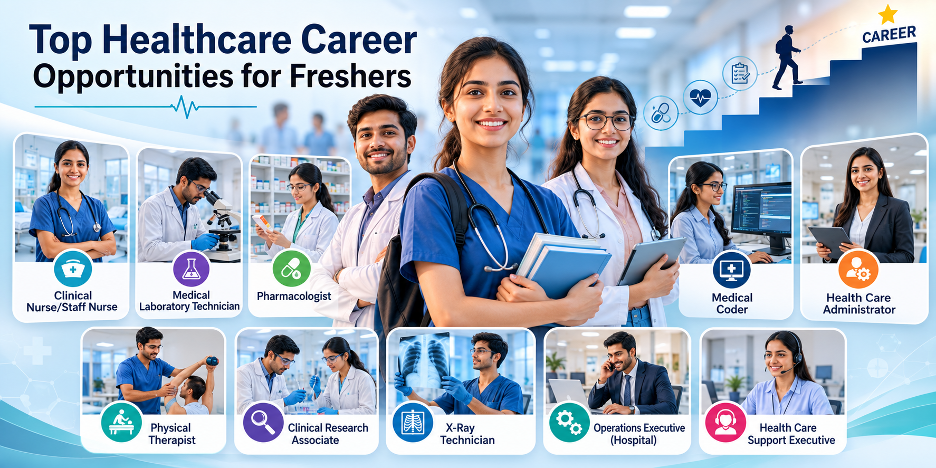
The various positions listed above differ in terms of type of work and the environment in which they are performed. Some positions will require direct interaction with patients, while others may involve working with technology or related to research, managing a hospital, or doing diagnostic or operational processes related to a hospital or other health care organization.
When choosing a career in health care, new graduates should not base their decision solely on potential salary. Long-term growth opportunities, responsibilities associated with each job, and personal interests should all help guide individuals toward making better career choices.
While education is still vital, recruiters in the health sector now place more emphasis on practical and professional skill. Because health care professionals interact with patients, physicians, administrators and support staff on a daily basis, good communication and teamwork skills are very important to them.
Most recent graduates have excellent theoretical knowledge but may lack the necessary skills to succeed in the workplace; therefore, employers frequently assess candidates based on their performance in various situations, how well they relate to others and their ability to fit into the workplace.
Examples of important skills that health sector employers typically seek include:
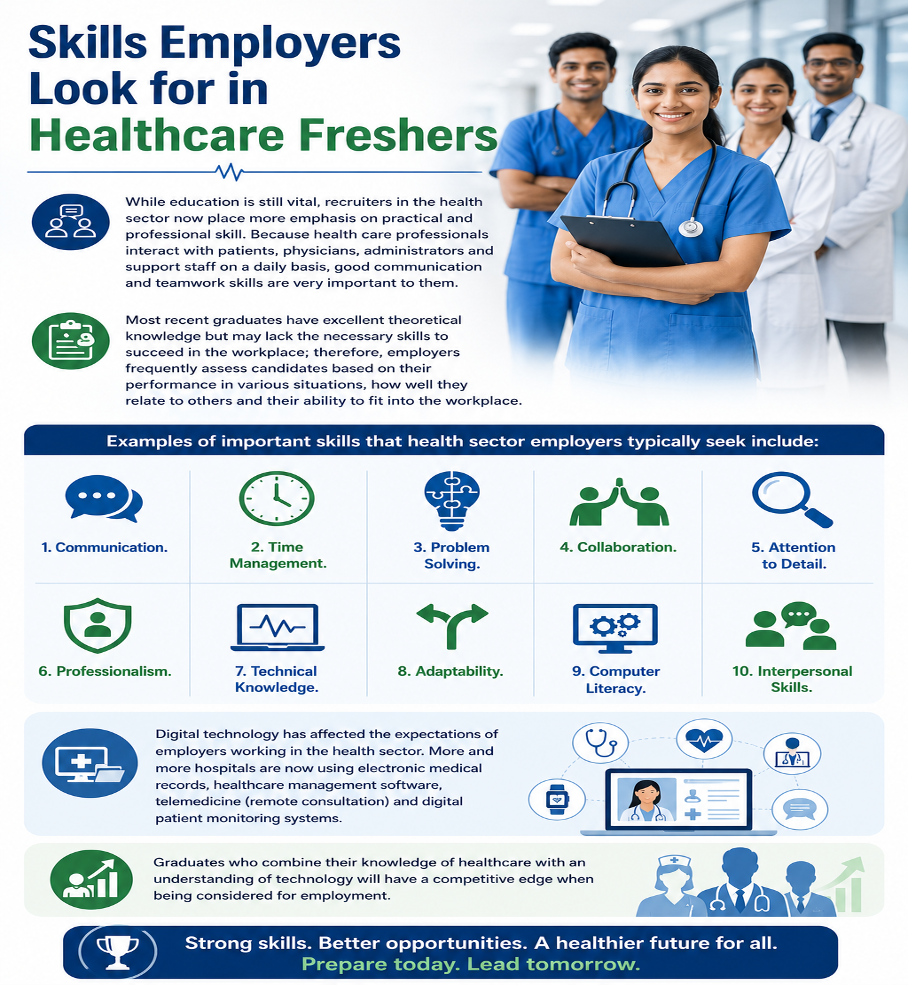
Digital technology has affected the expectations of employers working in the health sector. More and more hospitals are now using electronic medical records, healthcare management software, telemedicine (remote consultation) and digital patient monitoring systems.
Graduates who combine their knowledge of healthcare with an understanding of technology will have a competitive edge when being considered for employment.
One of the most popular discussions for students about to enter the healthcare field is salary. Starting pay can vary based on education level, area of specialization, type of employer, geographic location, and the skill level of the individual.
Health care workers employed in metropolitan cities may see additional or different types of pay than workers in smaller cities and rural areas. Likewise, there are typically different pay structures between government and private employers.
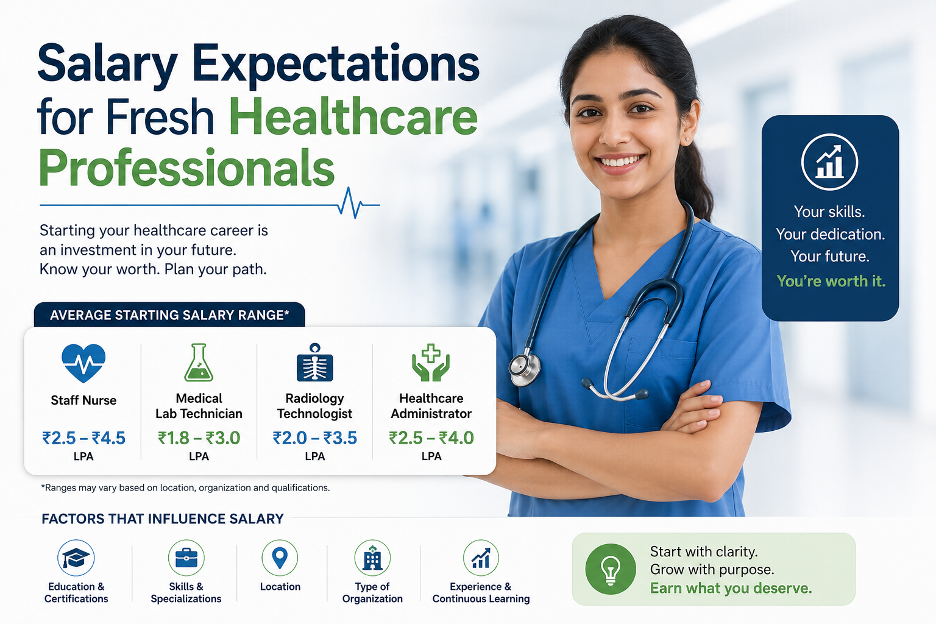
As you enter your first job after graduation, be aware that the salary offered is only the starting point of your career. In the long run, your total salary will be influenced much more by your level of experience and area of specialization than by your first year’s salary.
Furthermore, the majority of healthcare careers tend to have a way to reward professionals who pursue lifelong education and continuously develop their skill set.
Take, for example, a medical coder with advanced certifications; their growth in salary and job responsibilities typically outpace those of coders who only have entry-level certification. Similarly, nurses who obtain specialized training will usually advance to higher-level positions with greater responsibilities and salaries.
Therefore, early in your career, you should be focused on developing your skills and taking advantage of available learning opportunities, rather than fixating on your salary.
For many new college graduates entering into a professional work environment can be a daunting experience. A recent grad likely faces many challenges while searching for an appropriate job. Limited real-world experience is one of the biggest challenges faced by graduates looking for jobs. Most colleges and universities focus more on classroom based academic instruction with little or no emphasis on obtaining actual hands on learning for their graduates. As a result, most employers would prefer to hire job candidates who have been exposed to real-time work as opposed to those who haven’t. Competition is another challenge for new graduates entering the work force. Each year thousands of graduates from healthcare programs will graduate and are applying for similar jobs in the healthcare industry.
Communication skills are another area of challenge for some new graduates to overcome when interviewing for jobs. Technical knowledge is not enough to ensure that the candidate will do well in the work environment if they cannot articulate their thoughts clearly. Finally, many graduates make the error of only applying to large hospital systems or networks when applying for jobs. Smaller organizations can provide great value in experience when comparing smaller hospitals to larger hospitals.
Finally, many candidates apply for an unclear career path. For example, candidates may be uncertain of their career path i.e. do I want to work in a clinical area, administrative area, technology area or a research area. By understanding the challenges a candidate faces, they can better prepare for an effective job search.
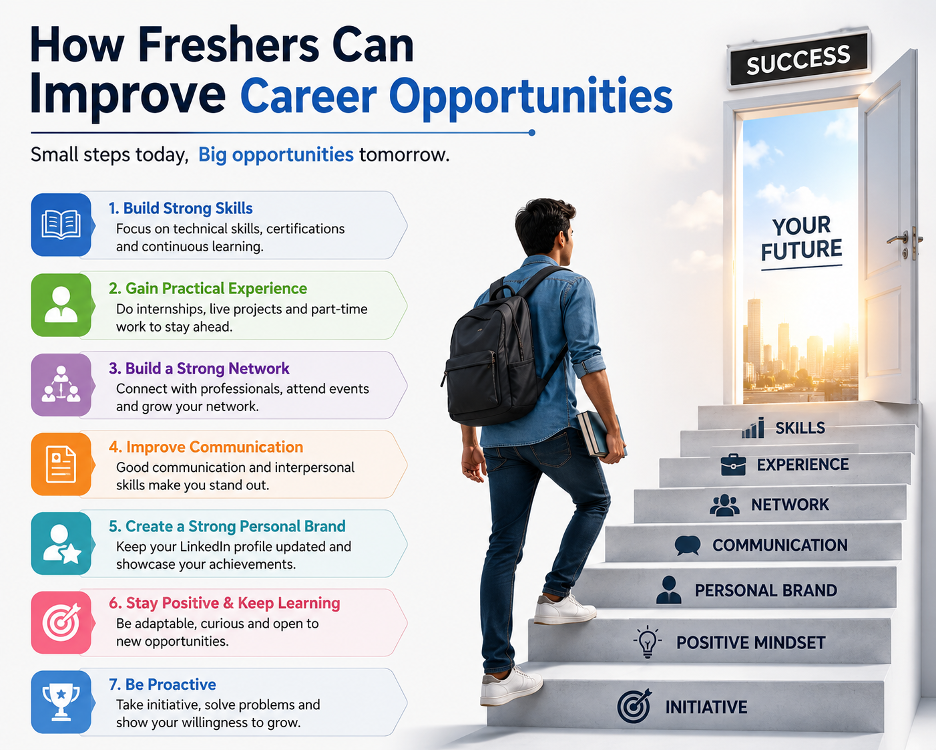
Healthcare workers can improve their career opportunities through continual education and developing their knowledge and skills related to the profession.
Internships, certifications, attendance at workshops, improvement of communication skills, utilization of various types of healthcare technologies, creation of a professional looking resume, and keeping up with new trends in the healthcare industry all have a positive impact on a person’s potential career opportunities.
Internships can provide students with hands-on experience in actual healthcare settings. Having a professional certification can add value to a resume for a healthcare worker and provide experience for graduates to develop specific expertise in the areas of medical coding, healthcare management and clinical trial research.
Your resume is usually your first impression when being recruited. Many recent graduates in the healthcare field don’t realize that they need to have a well-organized and professional resume. Because recruiters spend only a limited amount of time reviewing applications, it’s important for you to clearly list your education, work experience, certifications, and skills on your resume.
New graduates should only include necessary information on their resume and avoid adding things that do not relate to them. For example, recent grads who are creating a strong resume will typically have previous internship experience, academic or work projects, and experience working with healthcare software programs. In addition, they can customize their resume to match the qualifications for specific positions instead of submitting the same generic resume for all job postings.
Having a good, well-structured resume will help increase your chances of being called for an interview and will also help you stand out from other candidates to a recruiter.
The healthcare field has a tremendous opportunity for long-term growth in different areas. Many new healthcare workers start at entry-level jobs and develop through experience and eventually reach positions of senior leadership, such as nurses advancing to supervisory or leadership positions; healthcare administrators moving into managing departments or managing entire hospitals; medical coders transitioning into auditing or compliance roles; and clinical researchers transitioning into project management roles.
Career development generally correlates with ongoing education, certification attainment, performance, and gained working experience. Healthcare professionals who stay current with new developments can often achieve stronger long-term success.
Innovation in healthcare is driven by technological improvements, patient demand and medical innovation.
Artificial intelligence, telehealth, complex electronic medical records, wearable devices and digital health are all impacting the way we operate in healthcare today.
Many of the future healthcare workers will be using new technologies instead of working in the way their predecessors did.
All graduates entering into the field of healthcare must consider the various technological advancements occurring in their industry an opportunity rather than an obstacle.
Healthcare professionals who continually adapt to their changing surroundings and keep up with innovation will create a significant competitive advantage for themselves during their careers.
India has plenty of job possibilities for new graduates looking to work in the healthcare industry. You’ll find many options available to you whether you want to work in a clinical or non-clinical (such as administrative or technology) capacity; the healthcare field is steadily growing, and new positions continue to be created as more professionals enter the workforce.
The key thing for new graduates is to be proactive about gaining experience and developing their skill sets such as by taking courses, improving communication skills, learning new technology requirements, and developing sound professional habits. You will often see your own advancement through job roles and responsibilities; often, job duties and responsibilities will increase with advancement in the industry; do not assume that once you’ve performed at a job level of ability for any length of time, you will no longer be able to advance. The point of entry to the professional workforce may be only the beginning; if prepared, fresh graduates will succeed and find rewarding careers in the healthcare industry.